Halloween Pumpkin Scary Tumbler Wrap
First Impressions: A Spooky Silhouette That Knows Its Role
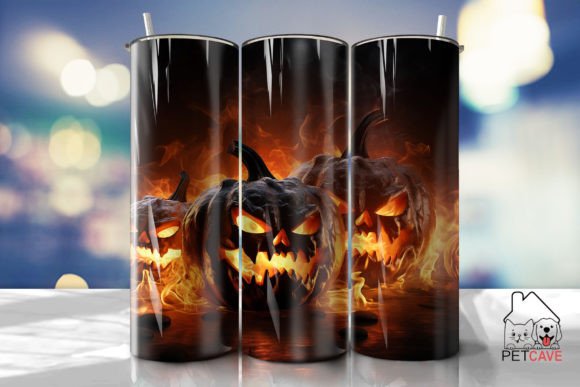
When I opened the Halloween Pumpkin Scary Tumbler Wrap ZIP file, what struck me first wasn’t just the grinning jack-o’-lantern—but how cleanly it occupies space. The straight and tapered 9.3” x 8.2” PNGs aren’t just dimensions; they’re intentional framing for real-world use. This isn’t a generic pumpkin clipart dump. It’s a focused, bold silhouette with exaggerated eyes, a jagged mouth, and subtle texture in the carved edges—designed to hold up under stitch, not just screen. As a designer who’s stitched hundreds of Halloween pieces for boutique clients, I immediately saw its sweet spot: not as a standalone motif on a onesie, but as a confident centerpiece on a canvas tote, an apron front, or a cozy sweatshirt chest panel.
Where It Shines (and Where It Needs Thought)
I tested the Halloween Pumpkin Scary Tumbler Wrap concept by mocking it onto a natural linen tea towel and a midweight cotton sweatshirt—both common Crafts category staples for small shop owners and Etsy sellers. On the towel, the tapered version wrapped beautifully around the curved edge of a ceramic mug mockup, reinforcing why “tumbler wrap” is more than a title—it’s functional design thinking. On the sweatshirt, the straight version anchored a clean chest placement without overwhelming the garment. Customers respond well to this kind of confident simplicity: it reads instantly as Halloween, feels handmade (not clipart-y), and scales well across product types—from embroidered patches for kids’ backpacks to holiday gift sets for local boutiques.
That said, it’s not universally forgiving. On thin baby onesies or stretchy jersey caps, the solid fill areas would need careful digitizing—this PNG is a starting point, not a ready-to-stitch embroidery file. Without knowing the actual stitch density or underlay structure, I’d treat it as a graphics asset best used with a trusted digitizer or embroidery software that lets you control fill angles and pull compensation. For commercial embroidery projects, especially those headed to craft fairs or wholesale accounts, clarity matters: customers notice when thread bunches in dense corners or when fine details vanish on dark fabric. The pumpkin’s eye sockets and tooth gaps are expressive—but only if your final stitch file preserves them.
Real-World Fit: From Personalized Gifts to Small Shop Inventory
Last week, I prepped a batch of personalized gifts for a local coffee shop’s Halloween pop-up: embroidered canvas totes, cotton aprons, and fleece-lined pillow covers. The Halloween Pumpkin Scary Tumbler Wrap slotted right in—not as a tiny accent, but as the hero element. On the apron, it sat just below the pocket line; on the tote, centered high for maximum visibility. Because the PNGs are 300 DPI and crisply outlined, my digitizer had no trouble converting them into clean satin-stitched borders and balanced fill-stitch interiors. That level of source quality directly impacts perceived value: buyers pay more for crisp, intentional designs—and they trust makers who deliver consistent, professional-looking finished products.
For Etsy sellers listing digital embroidery files or physical handmade products, this design supports strong branding. It’s thematic without being childish, spooky without leaning into gore—ideal for family-friendly shops, school PTA fundraisers, or seasonal kitchen collections. I’ve seen similar motifs flop when scaled too small or placed on textured burlap; the Halloween Pumpkin Scary Tumbler Wrap’s generous proportions and clear negative space help it avoid that trap. Still, always test on scrap fabric first—especially with layered garments like quilted oven mitts or double-knit blankets where stabilizer choice becomes critical.
Practical Designer Notes You Can’t Skip
- Test before committing: Run a sample on your most common fabric—cotton twill, fleece, or canvas—and note how thread colors interact. A warm orange against charcoal gray reads differently than against ivory linen.
- Check contrast early: View the PNG in black-and-white mockups. Does the shape hold? Does the taper still read clearly on curved surfaces?
- Stabilizer isn’t optional: Dense fill areas demand cutaway or tear-away backing, especially on lightweight or knit fabrics. Don’t assume the design will float cleanly.
- Review licensing carefully: Since this is a Graphics listing—not a machine embroidery design—the files are for digitizing or print use. Confirm whether resale of finished embroidered items or derivative digital products is permitted before listing on Etsy or Shopify.
- Consider your hoop size: At 9.3” wide, this won’t fit in a standard 4x4 hoop. Plan for 5x7 or larger—and verify your machine’s max stitching area before digitizing.
- Inspect detail fidelity: Zoom in on the PNGs. Are the teeth sharp? Is the stem distinct? If edges blur at 200%, re-export or request a vector alternative from the seller.
Final Thought: A Strong Asset—If Used With Intention
The Halloween Pumpkin Scary Tumbler Wrap doesn’t try to be everything. It’s not a full scene, a script font bundle, or a set of coordinating ghosts and bats. It’s one confident, scalable, mood-driven element—and that’s exactly what makes it valuable. In my studio, it joins a shortlist of Halloween design assets I reach for when clients want recognizable, stitch-ready impact without visual noise. Whether you’re building a seasonal craft business, prepping holiday inventory, or creating personalized gifts for friends and family, this is the kind of graphics asset that earns repeat use—not because it’s flashy, but because it works.
Just remember: PNGs are foundations, not finish lines. Your skill, fabric choice, stabilizer, and digitizing discipline determine whether the Halloween Pumpkin Scary Tumbler Wrap becomes a standout embroidered patch—or a lesson in why resolution and intent matter long before the needle drops.