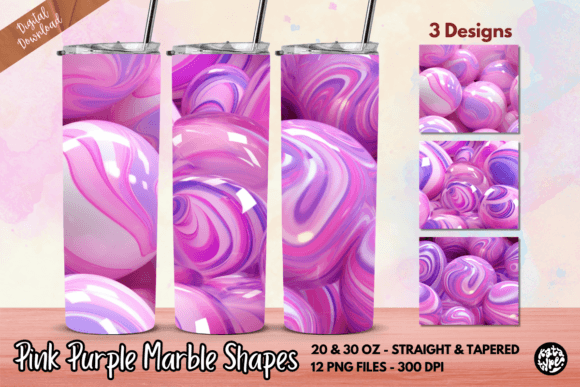
Pink Purple Marble Shapes Tumbler Wrap
First Impressions: A Soft, Modern Pulse for Handmade Goods
Opening Pink Purple Marble Shapes Tumbler Wrap feels like unrolling a swatch of dusk-light silk—soft gradients, organic edges, and that gentle marble swirl that breathes without shouting. It’s not loud or literal; it’s mood-driven, abstract, and quietly confident. As an embroidery designer who’s stitched everything from baby onesies to boutique aprons, I immediately saw its potential beyond tumblers: this is a design that translates beautifully into embroidered patches, tote bag accents, pillow covers, and even subtle sweatshirt chest motifs. The three included patterns each carry distinct rhythm—one leans geometric, another flows like watercolor, the third balances both—but all share that cohesive, calming pink-to-purple transition. No harsh lines, no tiny fussy details. That’s a relief.
Real Project Test: Stitching It onto a Linen Tea Towel
Last week, I used one of the 20 oz. straight versions as a design base for a custom linen tea towel—intended as a wedding gift for a couple who loves minimalist, nature-adjacent aesthetics. I resized it slightly (keeping proportions intact), digitized it as a low-density fill stitch with soft satin-stitched borders, and stitched it on medium-weight linen with tear-away + cut-away stabilizer. The result? Clean, breathable, and unmistakably handmade—not “machine-made” in the stiff sense, but thoughtfully rendered. Customers notice that difference. When you embroider Pink Purple Marble Shapes Tumbler Wrap on natural fiber textiles, it reads as intentional artistry, not just decoration.
Where It Shines—and Where It Needs Thought
- Custom apparel & sweatshirts: Works best on mid-to-heavy fabrics where the marble’s softness won’t get lost in texture. Avoid ultra-fleece or heavily brushed cotton unless you add extra underlay stitches.
- Tote bags & aprons: Ideal for side panels or lower-corner placement—its flow complements the drape and movement of woven canvas or denim.
- Baby items & nursery decor: Gentle enough for onesies and burp cloths, but test stitch density first—low-fill versions prevent stiffness against delicate skin.
- Holiday & wedding gifts: Feels special without being seasonal. Perfect for “just because” luxury gifting—think embroidered kitchen towels, monogrammed pillow covers, or personalized cap visors.
- Etsy listings & small shop branding: Use the PNGs to build clean, consistent mockups. Pair with neutral backgrounds and soft natural lighting—it photographs well, which builds buyer trust fast.
Embroidery Reality Checks: What You’ll Want to Confirm Before Stitching
This isn’t a plug-and-play machine embroidery design—it’s a digital download of PNG graphics meant for adaptation. That means your success hinges on thoughtful translation. Here’s what I always do before committing to a real project:
- Test on scrap fabric first—especially if using textured, stretchy, or dark fabric. Marble gradients can mute on black thread or disappear on charcoal linen without contrast testing.
- Review stitch density carefully. High-density fills may overwhelm the design’s airy feel; too-low density risks gaps between marble “veins.” Aim for 35–45% fill with open satin outlines.
- Confirm hoop size compatibility. The tapered shapes (20 oz. and 30 oz.) wrap curves tightly—so if stitching on caps or curved sleeves, check whether your digitized version maintains proportion without distortion.
- Inspect small details at actual stitch size. Those subtle shape overlaps? They’re elegant at 4" wide—but may merge into a blob at 1.5". Zoom in digitally *before* sending to your machine.
- Try black-and-white mockups alongside color. If the design holds visual weight in grayscale, it’ll translate reliably across fabric tones and thread palettes.
- Use proper stabilizer—especially for lightweight or loosely woven fabrics. The soft edges demand stability to avoid puckering or bleeding.
- Verify licensing before selling finished items or bundling as digital product assets. Since this is listed as a Graphics file in the Print Templates category, confirm whether commercial use (e.g., embroidered tote bags for resale) is permitted.
Design Integrity in Practice: Why It Builds Trust
When customers see Pink Purple Marble Shapes Tumbler Wrap on a finished product, they don’t see “tumbler wrap”—they see intention. That matters. In a market flooded with overdesigned clipart and pixelated repeats, this set feels curated, calm, and human-scaled. It supports brand consistency for makers who value quiet luxury over flash. And because it avoids clichés (no hearts, no script fonts, no forced whimsy), it scales gracefully—from a $28 Etsy tea towel to a $95 boutique apron line.
It also invites customization. I’ve layered it beneath simple monograms, offset it with minimalist running-stitch borders, and even reversed it into negative space on dark denim. Its flexibility makes it a strong foundation—not a rigid template.
A Note on Texture, Washability, and Longevity
Marble motifs hold up surprisingly well through repeated washing—if digitized thoughtfully. Avoid dense fill areas near edges, minimize overlapping satin stitches, and steer clear of sharp internal corners (which snag). On thin or stretchy fabric, reinforce with light iron-on mesh. For baby embroidery or holiday gifts meant to last, pair with high-quality polyester thread and pre-wash stabilized fabric. The design itself doesn’t demand heavy coverage—it thrives in restraint.
Final Thought: A Quietly Versatile Asset
Pink Purple Marble Shapes Tumbler Wrap isn’t flashy—but then again, neither is a perfectly balanced stitch, a well-placed applique, or a handmade gift that feels like it was made just for one person. It’s the kind of design that works harder behind the scenes: elevating a simple tote, grounding a playful nursery set, or adding just enough sophistication to a craft fair booth. If you’re choosing embroidery file assets for real projects—not just digital previews—you’ll appreciate how much breathing room it gives both your machine and your creativity. Just remember: treat it like a sketch, not a stamp. Adapt it. Simplify it. Let it live in fabric, not just pixels.