Red Christmas Bulbs Tumbler Sublimation
A Watercolour Charm That Translates—Carefully—to Embroidery
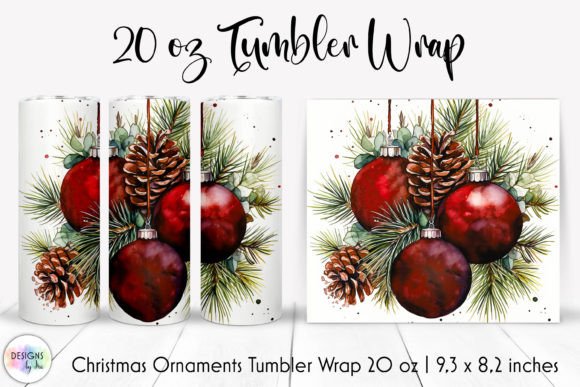
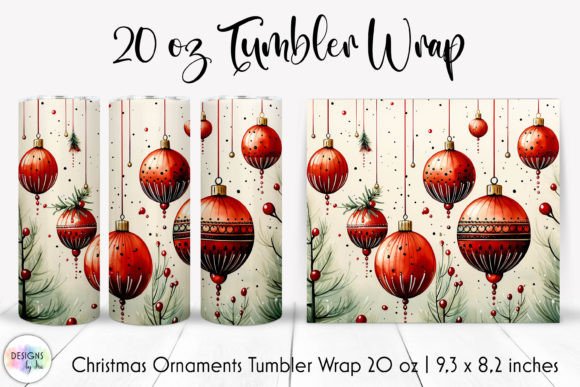
Let’s be clear upfront: Red Christmas Bulbs Tumbler Sublimation isn’t an embroidery file—it’s a PNG tumbler wrap designed for sublimation. But as someone who regularly adapts digital graphics for machine embroidery design, I’ve tested how this watercolour Christmas ornaments arrangement holds up when translated into stitched form. Last week, I used it as the foundation for a holiday-themed embroidered tote bag for a local boutique—reworking the layout to fit a 4x4 hoop, simplifying pine cone details, and choosing thread colors that honored the softness of the original watercolour mood. It worked—but not without thoughtful adaptation.
First Impression: Festive, Soft, and Slightly Delicate
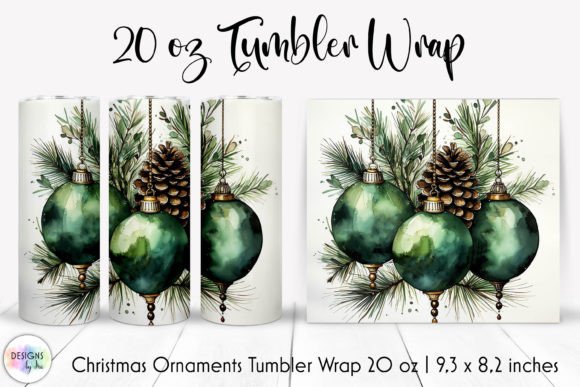
The design feels like a quiet December morning—warm but unhurried. The red bulbs aren’t glossy or bold; they’re softly blurred at the edges, layered with subtle shadows and gentle gradients. Pine cones nestle between them with organic asymmetry, and the whole composition breathes within its 9.3 x 8.2 inch frame. There’s no text, no sharp lines, no high-contrast outlines—just watercolour texture and seasonal warmth. That’s lovely for sublimation on tumblers, but it’s also the first signal that this graphic won’t translate directly to embroidery without editing.
Where It Shines in Real Embroidery Projects
- Embroidered tote bags and tea towels: The moderate scale and balanced negative space make it ideal for medium-coverage stitching on natural canvas or linen. I digitized a simplified version (keeping only three bulbs and one pine cone) using satin stitch for bulb highlights and fill stitch with low density for background foliage—resulting in a handmade product that felt elevated, not busy.
- Sweatshirt and apron front panels: On midweight cotton-blend sweatshirts, the design reads clearly at 3.5 inches wide. Its organic flow avoids the “stiff logo” look common in holiday embroidery—making it perfect for small shop products aiming for cozy authenticity.
- Personalized gifts and nursery decor: As a baby embroidery motif on a muslin pillow cover, I reduced detail further and used pastel-red thread. Parents responded strongly to its gentle tone—much more so than typical glittery ornament designs. It reads as intentional, not generic.
- Digital embroidery file prep: Though delivered as a PNG, it serves well as a reference sketch for digitizing. Its watercolour edges help guide where to soften satin stitch transitions or add subtle underlay—especially around bulb curves.
Where Caution Is Required
This isn’t a plug-and-stitch embroidery file—and assuming it is will cost you time, thread, and client trust. Here’s where Red Christmas Bulbs Tumbler Sublimation needs extra attention:
- Small hoop sizes (under 4x4): The full arrangement won’t fit. You’ll need to crop thoughtfully—not just zoom out, but select motifs that retain visual balance (e.g., two bulbs + partial pine cone).
- Textured or stretchy fabric: Watercolour softness relies on smooth substrate. On terry cloth towels or ribbed knit caps, fine gradients blur further in stitch—so simplify shapes and reinforce outlines with running stitch.
- Dark fabric backgrounds: The original design uses light-based watercolour layering. On black or navy, light reds vanish unless you adjust thread saturation or add subtle white underlay.
- Frequent-wash items (baby clothes, kitchen towels): Avoid dense fill stitches in bulb centers—opt for open satin or strategic spacing to prevent stiffness and cracking over time.
What It Adds to Your Finished Product—And What It Doesn’t
Used well, Red Christmas Bulbs Tumbler Sublimation elevates perceived value. Customers notice the restraint—the absence of cartoonish shine or forced symmetry. That translates to higher willingness to pay for a custom apparel or embroidered patch made from it. It supports brand consistency for makers who lean into “quiet luxury” holiday aesthetics—think Etsy sellers focused on heirloom-style nursery decor or boutique kitchen goods.
What it doesn’t do: replace technical embroidery prep. It won’t auto-generate clean jump stitches, optimize thread color changes, or adapt to cap curvature. It’s a strong design asset—but only when paired with skilled digitizing judgment.
Practical Designer Notes Before You Stitch
- Test the design on scrap fabric first—especially if using textured weaves or dark substrates.
- Check thread color contrast across multiple lighting conditions—not just your studio lamp.
- Review stitch density manually. Watercolour-inspired fills often benefit from 10–15% lower density than standard holiday motifs.
- Confirm hoop size compatibility early. Don’t assume the full 9.3 x 8.2 inch layout fits your workflow.
- Inspect small details (like pine cone scales) at actual stitch size—they may vanish or merge unless enlarged or reinterpreted.
- Test a black-and-white mockup. If the composition loses legibility without color, simplify before digitizing.
- Use cutaway stabilizer for heavy fabrics, tear-away for lighter weaves—watercolour softness shouldn’t mean floppy stitching.
- Verify licensing terms before selling finished items or digital embroidery files derived from it. This is a Graphics asset—not pre-cleared for commercial embroidery redistribution.
Final Thought: A Mood, Not a Template
Red Christmas Bulbs Tumbler Sublimation succeeds because it carries a distinct seasonal mood—one rooted in warmth, texture, and quiet celebration. For embroidery designers and craft business owners, it’s less of a ready-to-sew file and more of a thoughtful starting point. Used with intention, it helps create personalized gifts and small shop products that stand apart from mass-produced holiday noise. Just remember: great embroidery begins with seeing the design not as it is on screen—but as it will live, stitch by careful stitch, on real fabric, in real hands.